October 4, 2026
Buying in San Miguel’s UNESCO Historic Center: The INAH Rules
Falling in love with a colonial home in San Miguel’s Centro Histórico is easy. Renovating one is where the rules begin. If the house dates to the 16th through 19th centuries, or sits beside a protected monument, INAH controls everything visible from the street, from front doors & paint colors to rooftop additions. Here is how the UNESCO protections work in practice, what needs a federal permit, & how to verify a historic property before you sign.
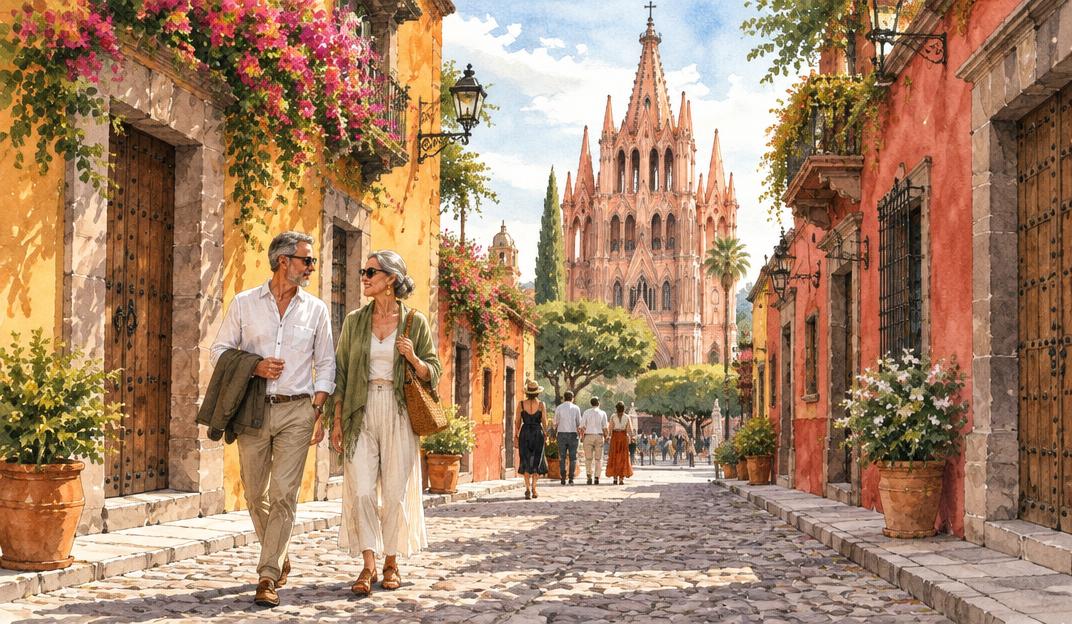
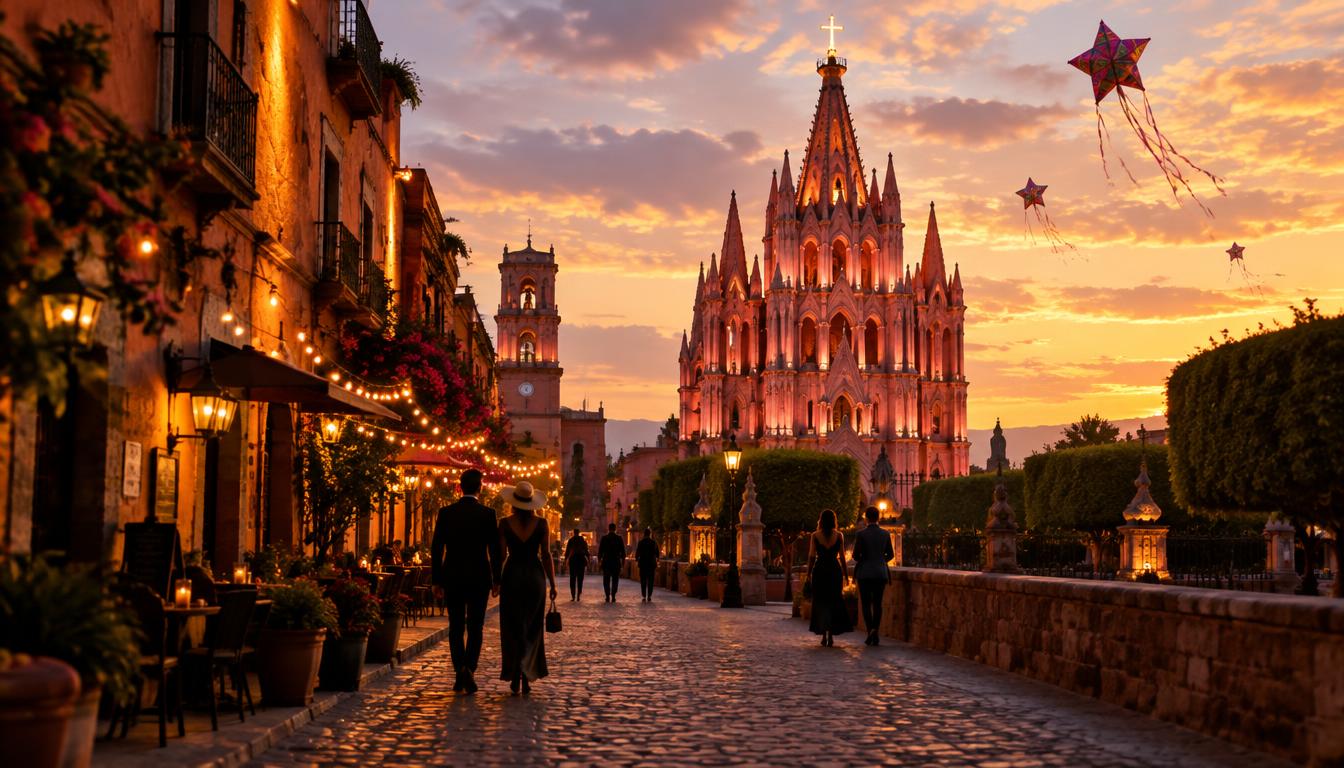
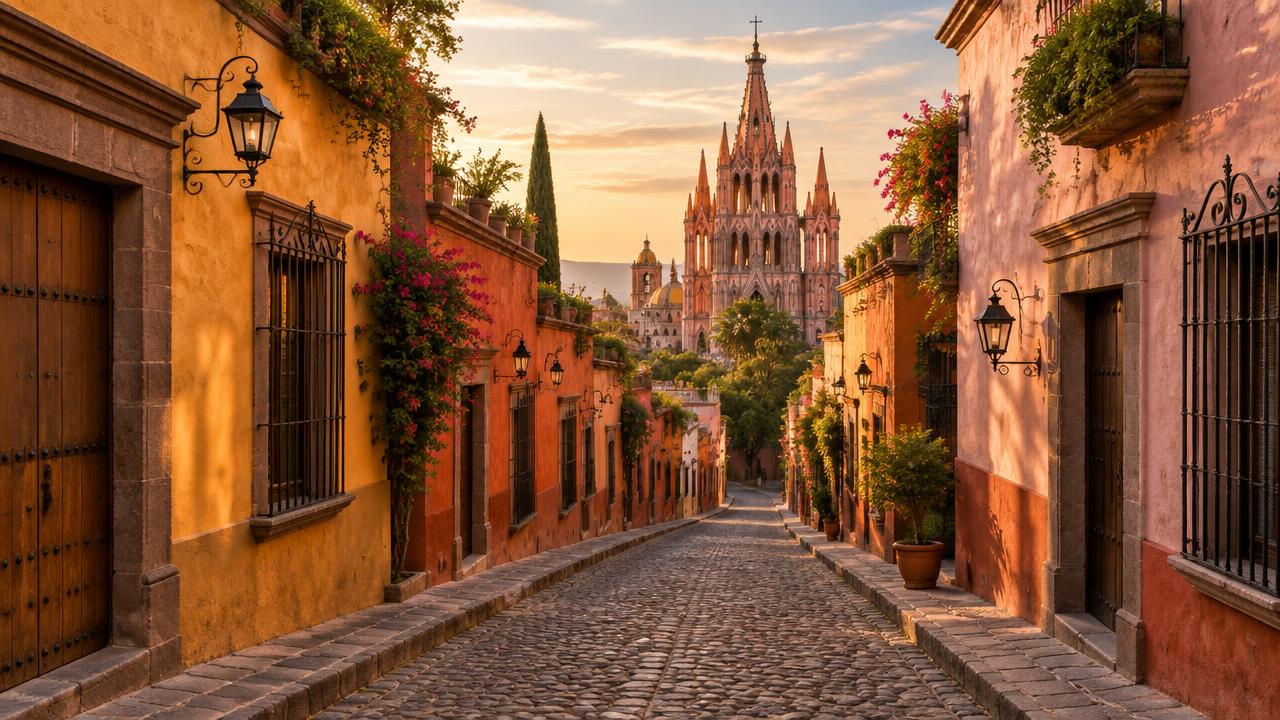
People fall in love with San Miguel de Allende in the Centro Histórico. The cobblestones, the old wooden doors, the way the Parroquia catches the evening light. UNESCO noticed the same magic & put the town on the World Heritage List in 2008. If you dream about owning one of those colonial homes, you need to know how the protection actually works, because it shapes every renovation you will ever imagine.
What does UNESCO protection actually cover in San Miguel?
UNESCO inscribed the Protective Town of San Miguel & the Sanctuary of Jesús Nazareno de Atotonilco on the World Heritage List in 2008. The rules that touch your renovation are older and more local: a 1982 federal decree declared about 0.75 square kilometers of the center a Zona de Monumentos Históricos, formed by 68 blocks of 16th to 19th century buildings.
You can read the inscription directly on the UNESCO World Heritage Centre’s listing, and the full 1982 decree, with every protected block named street by street, is published by the Secretaría de Cultura. That decree is the document that decides what you can change. The UNESCO listing protects the town’s international status. The decree protects your street.
Which properties does INAH control?
Three situations trigger federal review. If the building itself is a registered historic monument, if it stands beside one, or if it sits anywhere inside the declared monument zone, any construction work needs INAH authorization first. That covers most of the colonial core, so the practical rule in Centro is simple: assume INAH is in the room.
INAH’s own permit page is explicit that the rule applies to historic monuments, their colindantes, the properties that touch them, and everything inside a declared monument zone. You can read it on the INAH trámites portal. In practice this is why your architect should be the second person you call, right after the person showing you the house.
What changes need a federal permit?
Anything the street can see. INAH’s permit covers construction work on historic buildings, their neighbors, and everything inside the monument zone, and the review focuses on whatever alters the property’s exterior character. Buyers are usually surprised by how far that reaches, so here is the list I walk through with clients.
- Front doors, window frames & wrought ironwork
- Façade repairs, paint colors & stucco finishes
- Rooftop structures: pergolas, palapas & outdoor kitchens
- Second stories or any addition that changes the roofline
- Exterior signage, lighting & anything mounted facing the street
The permits are filed through INAH’s Guanajuato center, and they take time, often months for anything visible from the street. Skipping the permit is where people get burned. In August 2022, INAH publicly suspended unauthorized construction in the Centro Histórico and warned that unpermitted work puts the town’s World Heritage status at risk; you can read their statement in the INAH newsroom. Work gets sealed, fines follow, and what you built without permission usually comes down.
Why are rooftops where buyers get caught?
San Miguel’s rooftop terraces sell the dream, and they are also where INAH says no most often. Any new structure on a roof is construction work that needs a permit, and the review weighs what changes the skyline or is visible from the street below. Big pergolas, heavy outdoor kitchens & full extra stories regularly come back modified or denied.
Stand on any terraza above the Jardín at sunset and you will understand instantly. The Parroquia, the domes, the ridgeline of 18th century roofs: that skyline is the asset. INAH protects it under the idea of the town’s imagen urbana, the urban image, and rooftop additions are the fastest way to damage it. My honest advice: before you fall for a house because of what you could build up there, have your architect take the concept to INAH for an informal read. A ten-minute conversation saves six months of drawings for something that was never possible. And remember, a terrace that already exists is proof of nothing. Ask whether it was permitted.
How do you check a historic property before you sign?
Get the property’s paper trail before your money moves. Ask for every INAH authorization and municipal work license from past renovations, compare what was approved against what was actually built, and have your architect submit a concept for your own plans to INAH before closing. If past work was never permitted, that problem becomes yours the day you take the keys.
This belongs in your due-diligence window, alongside the home inspection and the title review your Notario runs. An inspector can tell you the roof drains badly. Only the permit file can tell you whether that beautiful second terrace was legal. If you are early in the process, my guide to the escrow process explains how to keep your deposit protected while these questions get answered.
Why are these rules good for your investment?
The same decree that complicates your pergola is why Centro looks the way it does and why values hold. A fast-food chain cannot open next to your villa. A neighbor cannot throw up a five-story building that eats your light. The streets you fell in love with will look like this in twenty years, and that kind of certainty is rare in real estate.
I have walked buyers through this frustration enough times to say it plainly: the paperwork is real, and so is the payoff. Protection on this scale is why San Miguel’s historic properties trade the way they do, and why the town keeps earning the "best city in the world" lists that fill our restaurant tables. The rules are the moat.
Who should be on your team?
A historic purchase needs three people who speak INAH’s language: a broker who knows which Centro properties carry which restrictions, an architect with approved INAH projects on their record, and a Notario or lawyer who verifies permits during due diligence. With that team, owning a piece of San Miguel’s history is absolutely doable. Without it, you are guessing.
If you are looking at a historic property in Centro and want an honest read on what you can and cannot do with it, let’s talk. I would rather have that conversation before you sign than after. And if you are earlier in the journey, the Buyer’s Roadmap walks you through every step to ownership here, & The Insider’s Guide covers what I wish every buyer knew on day one.
Sources
- UNESCO World Heritage Centre, Protective Town of San Miguel & the Sanctuary of Jesús Nazareno de Atotonilco (inscribed 2008)
- Federal decree declaring the Zona de Monumentos Históricos of San Miguel de Allende, July 28, 1982 (Secretaría de Cultura)
- INAH, construction permit for historic monuments, adjoining properties & monument zones (trámite INAH-02-002)
- INAH, call to halt damage to San Miguel de Allende’s architectural heritage (August 27, 2022)